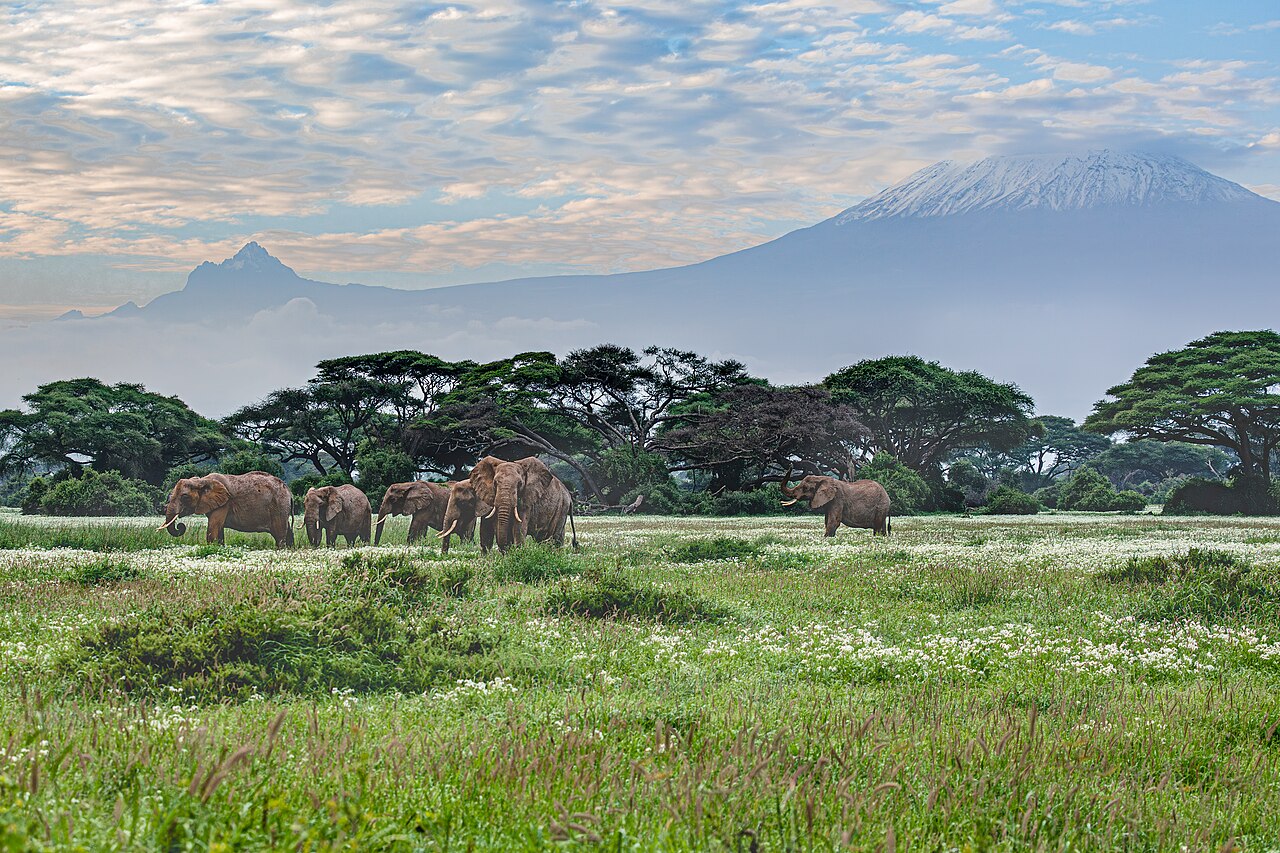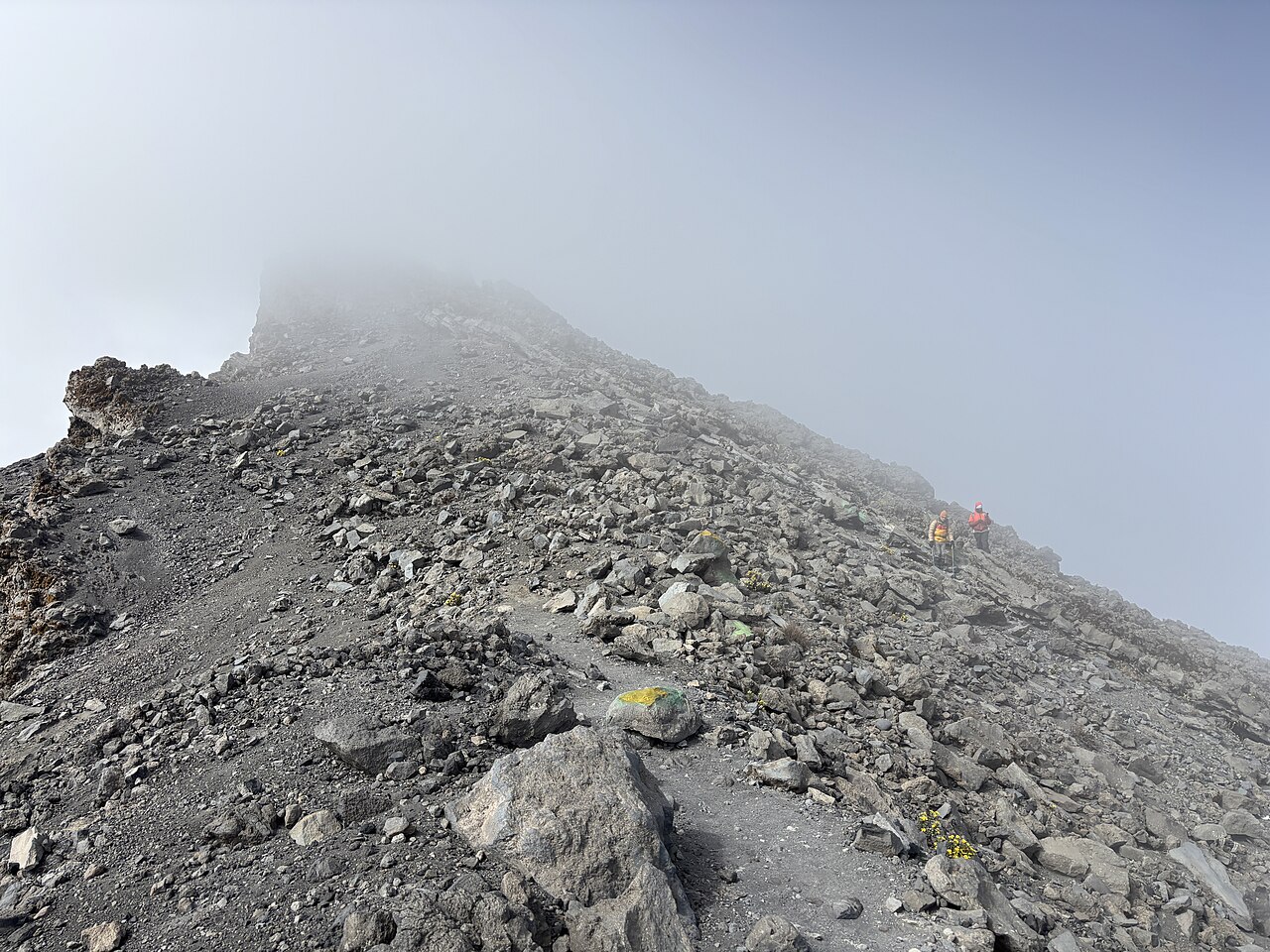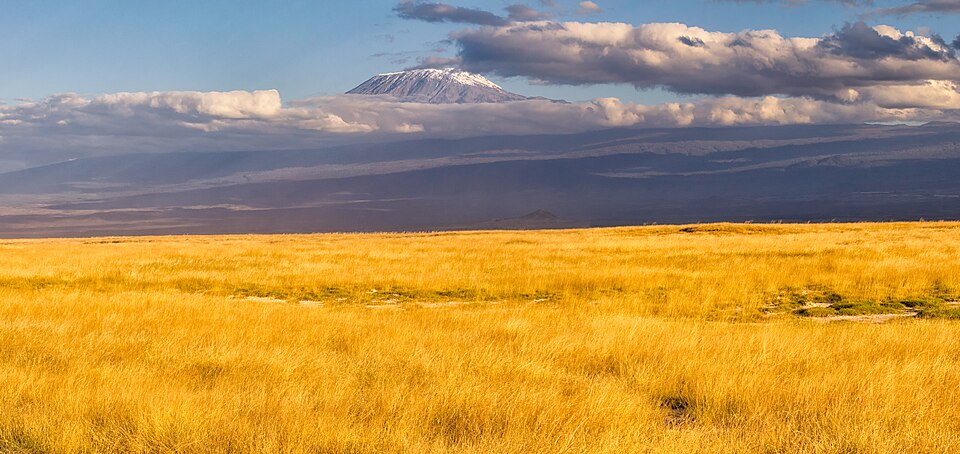
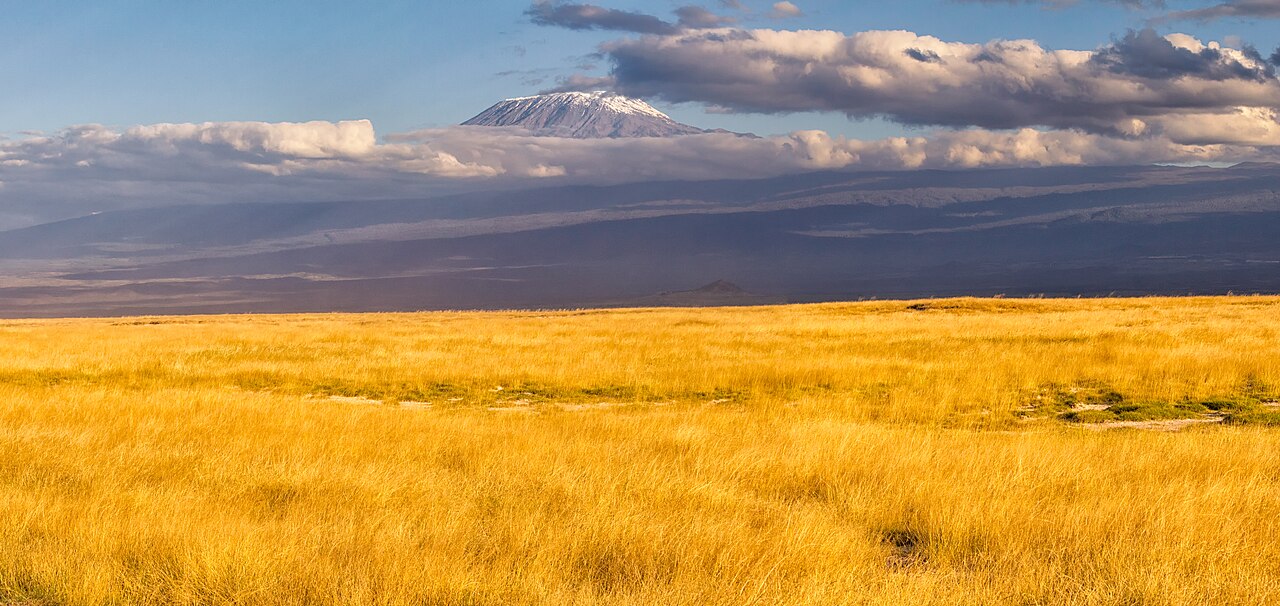
Mount Kilimanjaro rises to 5,895 m at Uhuru Peak on Kibo, its highest volcanic cone. Climbers pass through five distinct climate zones — farmland, rainforest, heath, alpine desert and arctic summit — over six to nine days, with no technical climbing required.
The biggest factor in success is acclimatisation. We recommend longer routes such as the Machame (7 days) or Lemosho (8 days), which follow a “climb high, sleep low” profile. Experienced mountain crews, quality equipment and daily health checks keep climbers safe.
Highlights
- Summit sunrise at Uhuru Peak
- Five climate zones
- Barranco Wall
- Glaciers on the crater rim
Wildlife & what you'll see
- Colobus and blue monkeys in the rainforest
- White-necked ravens
- Giant groundsels and lobelias
Things to do
- Trekking
- Summit climb
- Waterfall walks around Moshi
Best time to visit
January to early March and June to October, the driest months. Full-moon summit nights are popular.
Getting there
Fly to Kilimanjaro International Airport; climbs start from Moshi or Arusha.
Experiences in Kilimanjaro
FAQs about Kilimanjaro
How fit do I need to be?
You should be comfortable walking 6–8 hours a day for several days. No mountaineering experience is needed, but training hikes beforehand are strongly recommended.
What is the success rate?
Longer routes with good acclimatisation have much higher success rates. Our 8-day Machame itinerary includes an extra acclimatisation day.