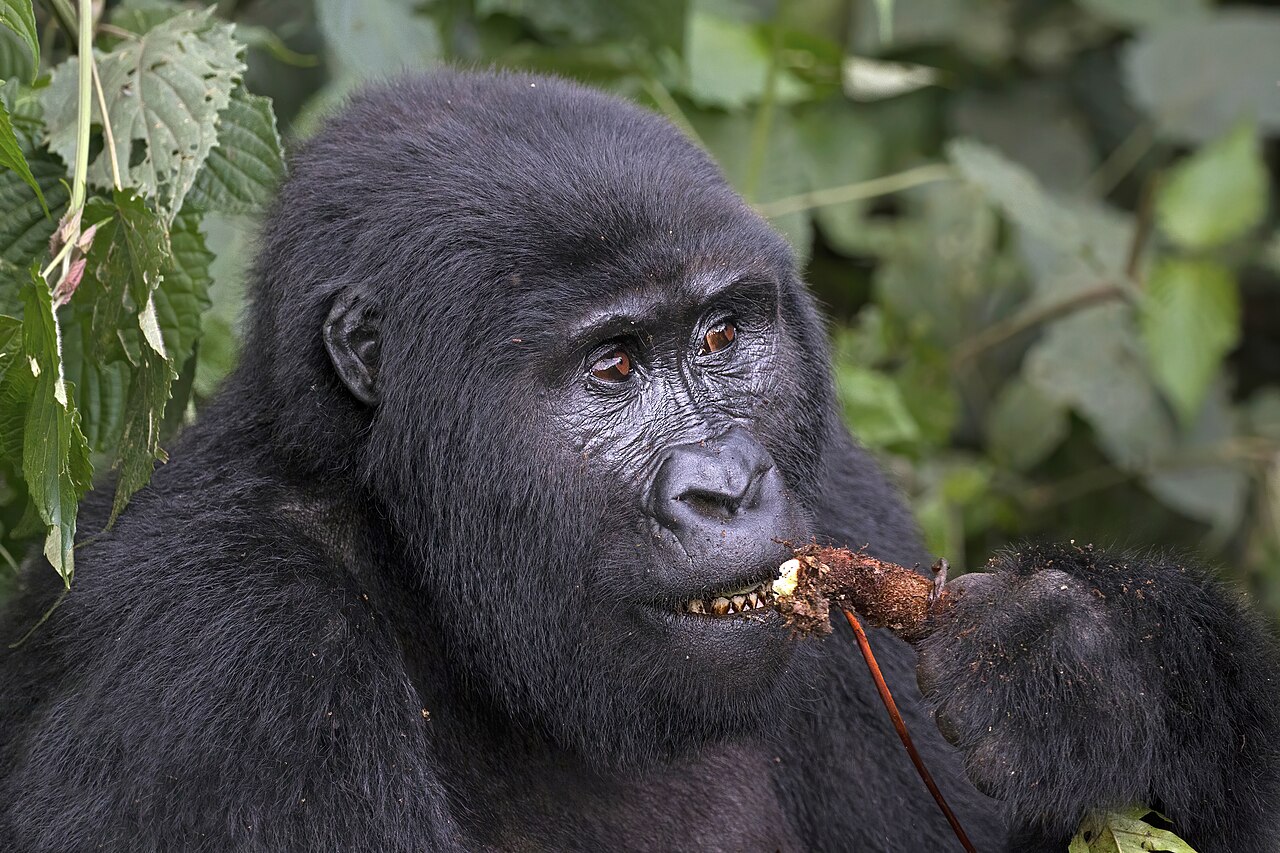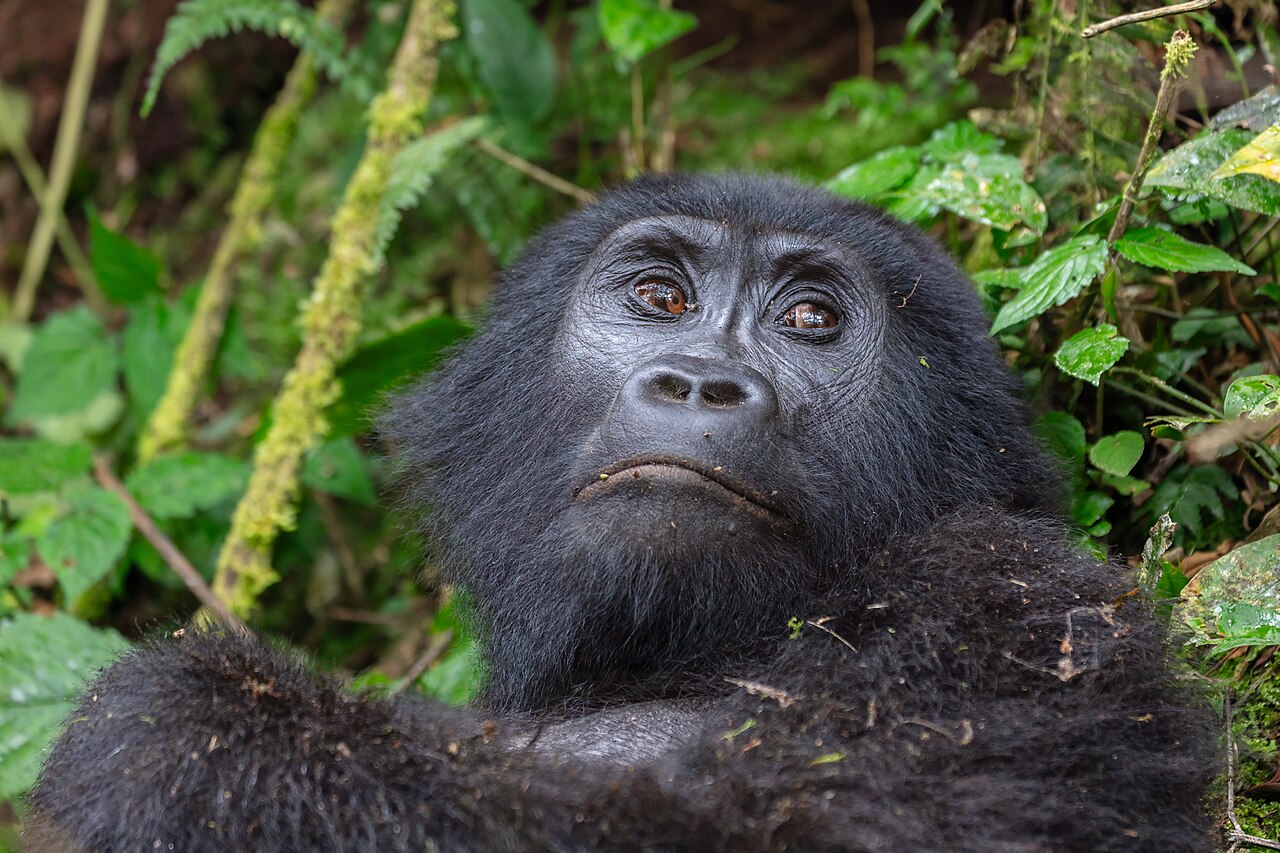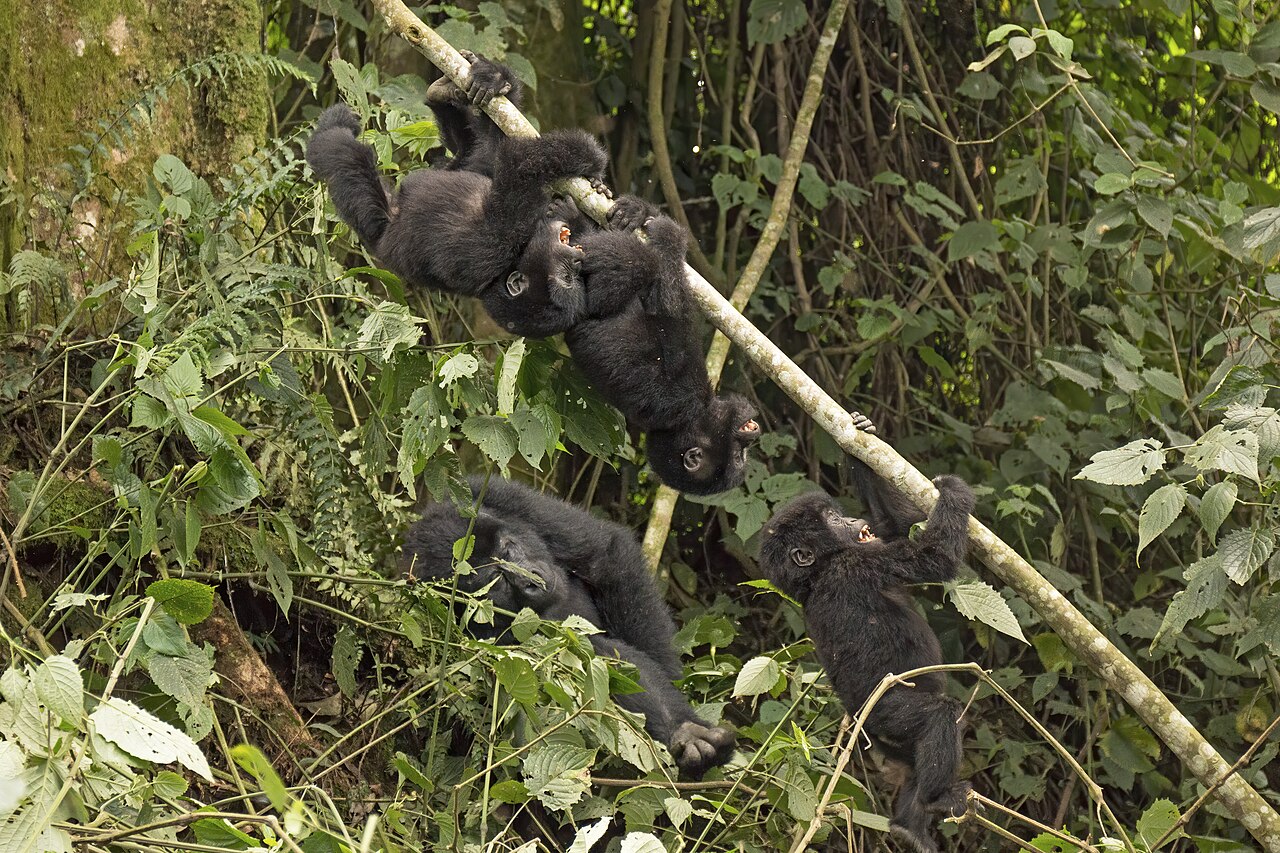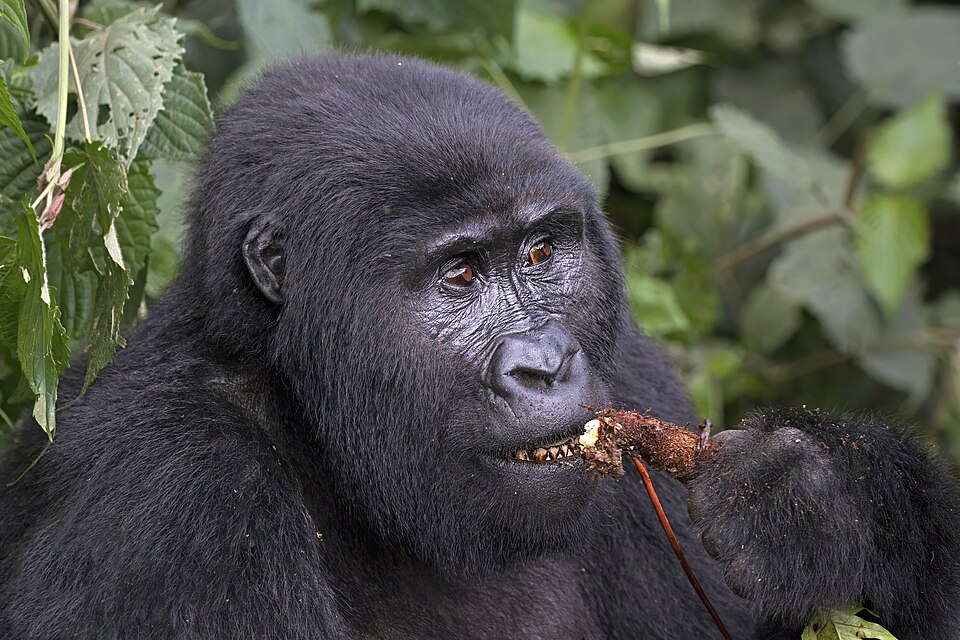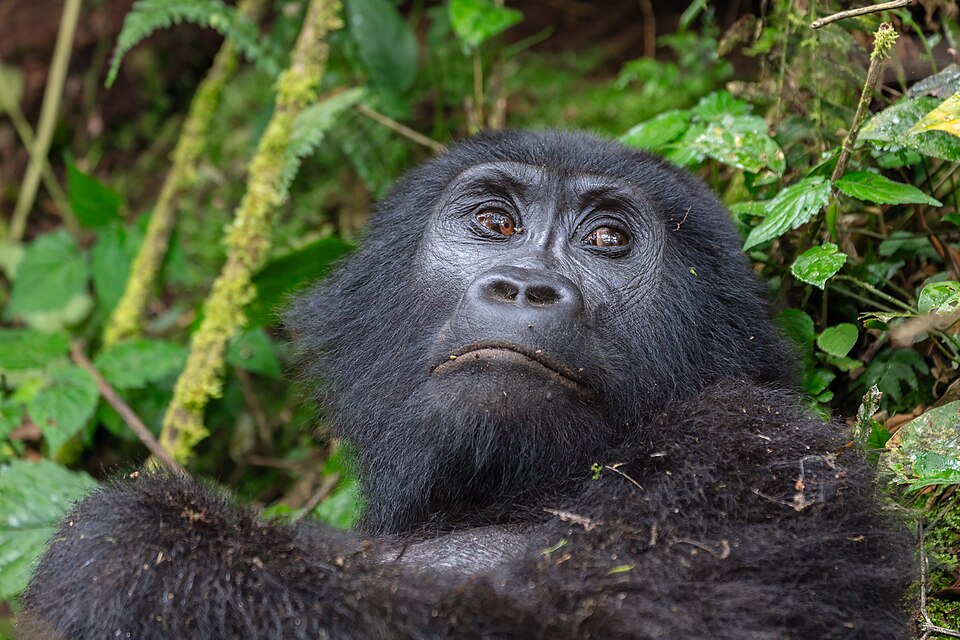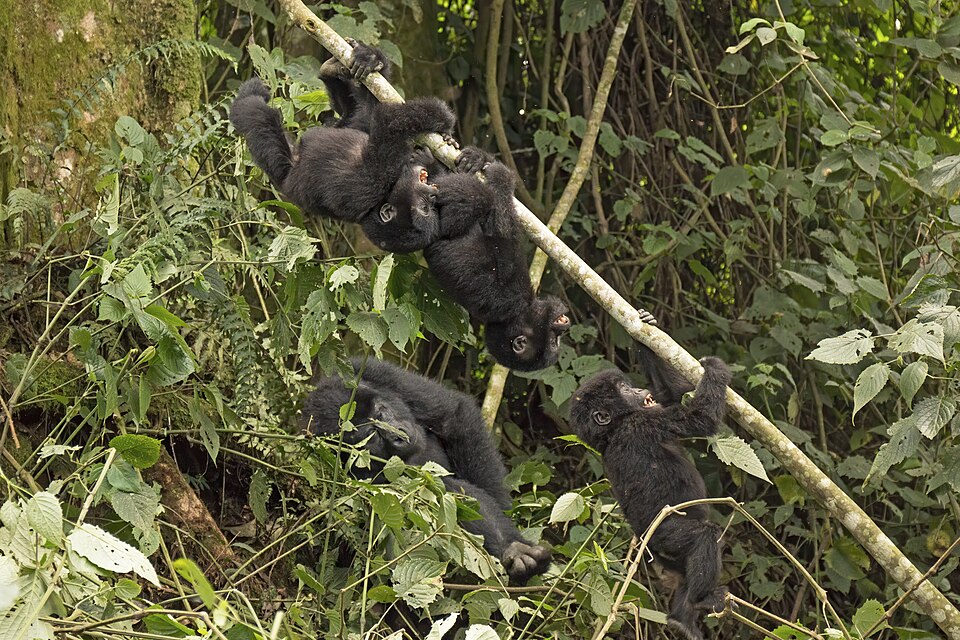
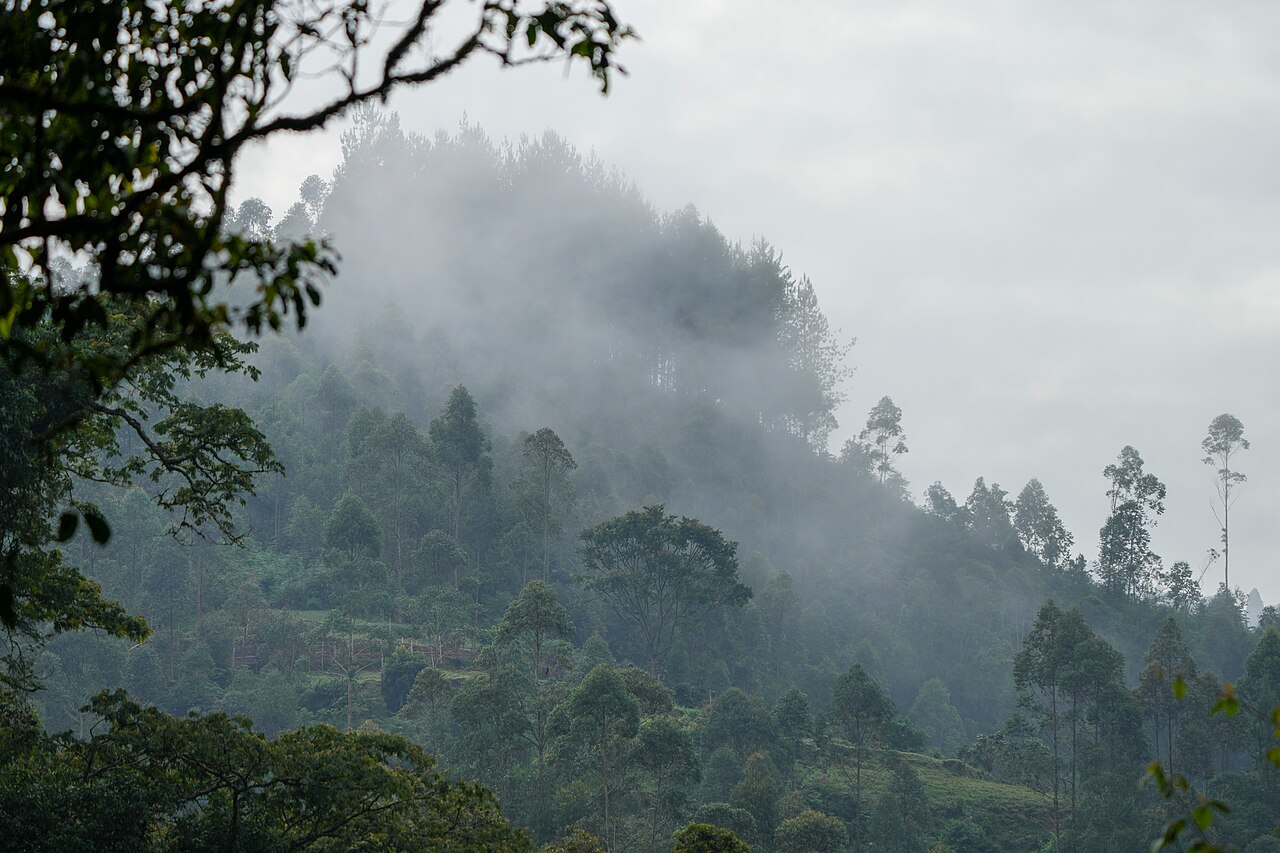
Bwindi Impenetrable National Park protects some 331 km² of ancient montane rainforest in south-western Uganda, and it lives up to its name: steep ridges, dense undergrowth and mist-filled valleys. It is home to around 459 mountain gorillas — nearly half of the world’s population — and more than 20 gorilla families are habituated to visitors.
The park is divided into four trekking sectors — Buhoma, Ruhija, Rushaga and Nkuringo — each with its own lodges and gorilla families. After a briefing, small groups of up to eight visitors set out with rangers and trackers, and once the gorillas are found you spend a precious hour watching them feed, play and rest.
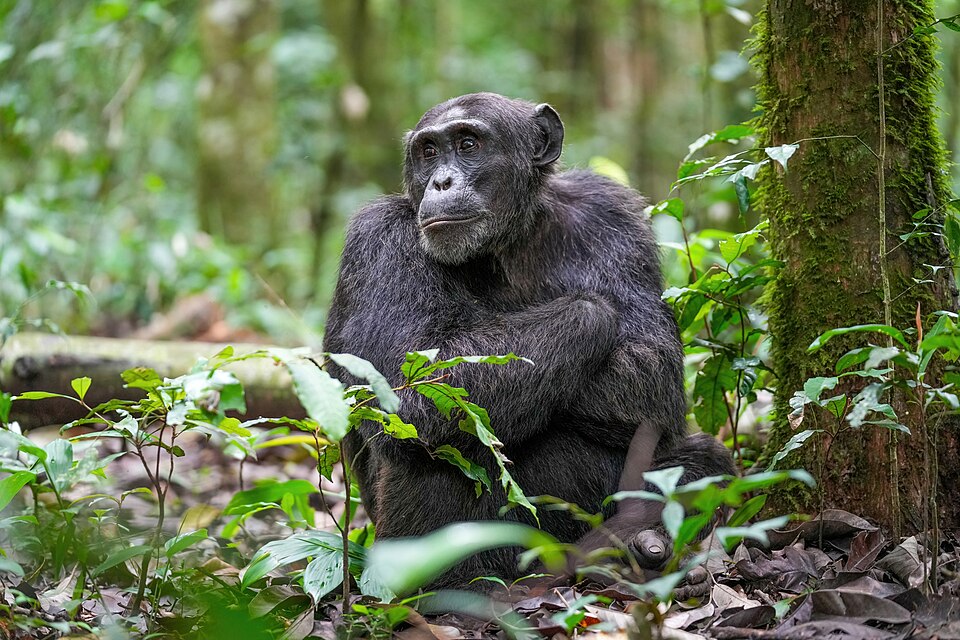
Bwindi also shelters chimpanzees, L’Hoest’s monkeys and 350 bird species, including 23 Albertine Rift endemics. Community walks and visits to the Batwa, the forest’s original inhabitants, add depth to a stay.
Highlights
- A life-changing hour with mountain gorillas
- Buhoma waterfall walk
- Batwa community experience
- Albertine Rift endemic birds
Wildlife & what you'll see
- Mountain gorilla
- Chimpanzee
- L'Hoest's monkey
- African green broadbill and other endemic birds
Things to do
- Gorilla trekking
- Gorilla habituation experience
- Nature walks
- Community visits
- Birdwatching
Best time to visit
June to August and December to February are the driest months. Trekking is possible all year.
Getting there
A scenic drive of 8–9 hours from Entebbe (usually broken with a night at Lake Mburo or Queen Elizabeth), or a 1.5-hour flight to Kihihi or Kisoro airstrip.
Experiences in Bwindi Impenetrable Forest
FAQs about Bwindi Impenetrable Forest
What is the gorilla habituation experience?
A special permit that allows up to four hours with a gorilla family still being habituated, alongside researchers. It currently costs USD 1,500 per person and is offered in the Rushaga sector.
What is the minimum age?
Gorilla trekking is permitted from 15 years of age.